

Wisconsin license plates carry more rules than most drivers expect, and almost all of them attach to the plate class rather than to the person holding it. A plate is a registration record first and a design second, which is why the character limit, the annual charge, and the renewal date all move together when a vehicle changes class. This page maps those connections in the order a driver meets them, before an order is filed rather than after it is paid.
Wisconsin license plates too fail in predictable ways. A message gets declined after payment, a design turns out to be unavailable for the vehicle, or a renewal pays the registration and drops the message fee. Each of those has a cause that can be checked in advance, and the guides below are organised around that idea rather than around a catalogue order.
How Wisconsin plates actually work
Three questions decide almost every plate outcome: what class the vehicle sits in, whether the plate carries a message, and when the registration renews. Everything else follows from those three.
The class comes first
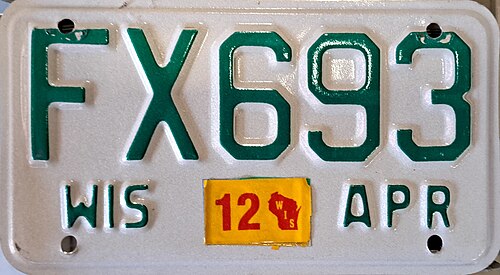
Passenger cars, light trucks, motorcycles, trailers, motor homes, commercial vehicles and collector vehicles each sit in their own class. The class sets the fee, the plate series, and often the character ceiling on a message. A design that looks available in a catalogue can be closed to your class, which is why the class is checked before the artwork.
The message sits on top
A personalized message is a modification rather than a separate product. It attaches to whatever series the class uses, it follows that series’ character limit, and it carries its own annual charge. A message approved on one series is not held on another, which matters when a vehicle changes class or a plate is replaced.
The renewal keeps it alive
Every plate above renews, and the renewal notice lists each charge separately. Paying the registration line and skipping the message fee or the sponsor donation is the single most frequent way a plate quietly loses the thing the owner paid for.
The order, start to finish
A plate order is short, and almost every failure traces to a move skipped rather than a rule misunderstood. The sequence below is ordered by consequence rather than by convenience, so the moves that cost the most when missed come first.
- Confirm the class and the character ceiling for that series.
- Draft five messages in plain letters and numbers, ranked by preference.
- Run every option through the state’s availability search.
- Submit the request and keep the confirmation reference.
- Mount the plate and the sticker when the envelope arrives.
The moves are ordered by consequence rather than by convenience. Skipping the availability check produces a rejected request, skipping the character check produces a truncated message, and skipping the confirmation leaves you without the only reference the state will accept during a follow-up.
What the confirmation gives you
The confirmation ties your payment to your order and carries the reference number used in every later conversation. Save it outside your inbox, since a confirmation lost with an email account is a confirmation you cannot produce when the state asks whether the payment cleared.
What arrives and when
Processing runs about four weeks from an online application. The envelope contains the finished plate and the placement sticker for the new period, and your existing plates stay legal during the wait. A registration that lapses inside that window can stop production even after a successful order.
Official sources
https://specialplates.wi.gov/https://wisconsindot.gov/Pages/online-srvcs/other-servs/pp-search.aspxhttps://wisconsindot.gov/Pages/dmv/vehicles/title-plates/persplat.aspxPopular Wisconsin license plate topics
Six sections cover the questions that arrive most often, and each one goes straight to the answer rather than to a sales page. Each card opens the page that answers the question in full, with the fee, the rule, and the official source attached.
Character rules, rejection reasons, ordering moves and the yearly message fee.
Updated recentlyPlate designs and coloursThe standard plate, the new blackout and retro designs, and how to switch.
Deadline helpRenew your plateDeadlines, payment channels, sticker placement and what a lapse costs.
ReferenceEvery plate categoryStandard, specialty, motorcycle, trailer, commercial and collector classes.
CostsRegistration feesWhat each charge is, who sets it, and why two similar cars can differ.
Know the limitsPlate lookupWhat the official tools return, and why owner details are not available.
Three facts behind most plate decisions
A plate is a registration record first and a design second, and the rules follow that order. The three points below cover the misknowings that produce the most expensive corrections.
A personalized message carries a yearly charge rather than a one-off purchase, and a missed renewal can release the combination to another driver.
The class sets the priceVehicle class and weight decide the base fee. A wheel tax, a surcharge or a plate charge stacks on top of it rather than replacing part of it.
The design has an ownerSpecialty artwork belongs to a sponsoring organization, and part of what you pay each year goes to that sponsor rather than to the state.
What a plate costs each year
Three lines cover nearly every renewal, and only one of them changes with the plate you choose. Registration sits on every notice, the message fee appears only on plates that carry a message, and a sponsor donation appears only on specialty designs.
| Charge | When it applies | Who sets it |
|---|---|---|
| Registration fee | Every renewal, automobiles | $85 per year |
| Personalized message fee | Plates carrying a message | $15 per year |
| Sponsor donation | Specialty designs | The sponsoring organization |
| Replacement plates | Damaged, lost, or stolen | $6 each, $5 for special plates |
| Wheel tax | Certain municipalities | Set by local ordinance |
Read the itemized lines rather than the headline total, since a payment that covers only registration can drop a message or a design. The renewal page walks through the notice line by line, and the cost page sets out why two identical cars can show different amounts.
New plate designs and what changed
The state added a blackout design and a retro butter-yellow design in 2025, both as alternates to the standard plate rather than as specialty plates tied to an organization. Neither changed the character rules, the message fee, or the renewal cycle.
What changed is choice. A design is now something a driver picks rather than something issued by default, and a switch carries a one-time issuance charge instead of an annual donation. The designs page covers both additions, the classes that can carry them, and what happens to an old design after a change.
Which plate fits your vehicle
Four families cover almost every vehicle on the road, and the family decides what the plate can say, what it costs each year, and when it renews. Choosing the family before the artwork saves a rejection.
The standard plate
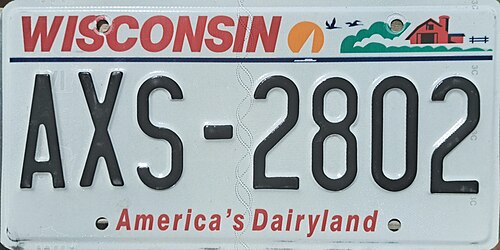
The plate issued with a registration, carrying the state design and a serial the state assigns. It accepts a personalized message on most series, carries no sponsor donation, and renews with the registration. For a driver who wants a message and nothing else, this is the cheapest route and the one with the widest choice of available combinations.
The personalized option
A message sits on top of whichever family the vehicle belongs to rather than forming a family of its own. It follows the character ceiling for that series, it cannot duplicate a combination already held on it, and it carries a yearly fee that repeats for as long as the message stays on the plate. A message approved on one series is not held on another.
The specialty design
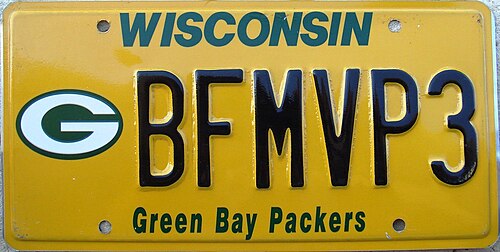
Artwork owned by an organization, with the background fixed and the message optional. Many designs are open to any registered owner, some require membership, and a few restrict by occupation or service history. An annual donation to the sponsor repeats on top of the message fee, which is the line that changes the five-year total most.
The collector classes
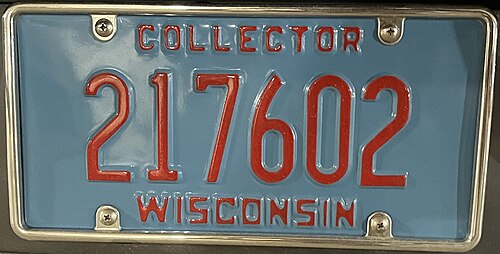
Collector, antique, and hobbyist registrations cover older and modified vehicles at a lower annual cost, in exchange for use limits. Most of these classes do not accept a personalized message, and the restrictions are enforced at renewal rather than at the point of sale. A vehicle used as daily transport belongs in the standard class regardless of its age.
What changes the price
Four variables move the annual amount, and only one of them is under the driver’s control. Class and weight are set by the vehicle, municipal charges follow the address, and the plate choice is the part a driver actually decides.
Vehicle class and weight
Class and weight set the base registration fee. A modification that adds weight can move a vehicle into a higher class, and the fee follows the class rather than the purchase price. This is the line that changes least often and moves the total most when it does.
Municipal charges
Some municipalities add a wheel tax, and the charge follows the registered address rather than where the vehicle is parked. A move across a boundary can change the total without anything on the vehicle changing, which is why an address update matters beyond mail delivery.
Plate choices
A message adds its yearly fee, a specialty design adds its sponsor donation, and a design change can add a one-time issuance charge. These lines stack rather than replace each other, and each appears separately on the renewal notice.
Payment channels
The state’s own channels collect the amount owed and nothing more. Commercial sites that offer to file the same form add a service fee, and the official channels end in .gov, which is the fastest way to tell them apart.
Five checks before you pay
The five checks below catch most of the errors that turn a plate order into a second order. Each one takes under a minute and saves the four-week cycle that a rejection costs.
Series first, message second
Availability is recorded per series rather than per state, so a message free on a standard plate can be taken on a specialty design. Confirm the series that matches your vehicle before checking any message against it.
Know the character ceiling
The ceiling belongs to the series, not to the state, and a seven-character idea cannot be tested on a series capped at five. Read the figure printed for your vehicle rather than trusting a general rule about seven characters.
Test the message three ways
Read the message aloud, then backward, then with each zero treated as the letter O. Review happens after payment, and a declined message costs weeks rather than minutes. A second option prepared in advance turns that loss into a delay.
Read the renewal consequence
Every plate above renews, and the notice lists each charge on its own line. A payment that covers registration and drops the message fee can release the combination, which is the most expensive version of a small mistake.
Fix the mailing address early
Plates ship to the address on the registration record in most cases. A move that has not reached the record sends the plate somewhere else, and a misdirected plate is a second request rather than a delivery delay.
Guides people read next
Four guides cover the situations that generate the most questions, and each one starts with the decision rather than the paperwork. They cover a lost plate, a collector vehicle, a plate number that will not resolve, and the display rules a stop will test.
Where to file what
Four requests cover almost every plate task, and each one has a single correct destination. Filing the wrong form produces a rejection that costs a week rather than a minute.
Renewals
The renewal portal handles a registration that already exists, showing the itemized amount before payment. It is the fastest channel and the one that produces an immediate confirmation. A first registration cannot be filed there.
First registration and title
A first registration, a title transfer, and a new resident application need a form and a supporting document rather than a renewal screen. The title assignment is checked before the payment is discussed, which is why a missing signature stops the process early.
Design changes
A design change runs through the special plates portal and behaves like a plate order rather than a registration event. It carries a one-time issuance charge for the designs added in 2025, and the plate number survives the switch in most cases.
Replacement
A lost, stolen, or damaged plate moves through the replacement process, and a stolen plate needs a police report before the request will proceed. The registration itself does not change, and the plate number survives inside the same series.
Reading the renewal notice
The notice is the only document that shows every charge at once, and it is worth reading line by line once a year rather than glancing at the total.
| Document | What it proves | Where it comes from |
|---|---|---|
| Renewal notice | The amount owed and the expiration date | The state, before the deadline |
| Confirmation | That a payment was received | The state, after payment |
| Registration | The vehicle’s current class and plate | The state, with the plate |
| Title | Who owns the vehicle | The state, at transfer |
A notice that shows fewer lines than expected is the signal to check before paying rather than after. A missing message fee or sponsor donation means the plate is about to change, and a call with the notice in hand is faster than a correction later.
The same reading habit catches the reverse error: a charge for a design you replaced, or a municipal fee attached to an address you left. Comparing two notices side by side identifies both in a minute, and the itemized lines are the only place either one becomes visible.
What a plate is not
Four misreadings cost drivers money, and each one has a short answer that saves a wasted request. Three of the four come up before an order is filed, and the fourth comes up after a payment has already cleared.
Not a lookup key
A plate identifies a registration, not a person. Owner names, addresses, and contact details sit behind federal privacy protection, and no public tool returns them. Services that advertise owner details after a payment are selling something that does not exist, or collecting the card details used to pay for it.
Not a decorative item
Metal signs sold as custom plates for walls, bars, and gifts carry no registration and no state fee. A decorative plate is a different product from a registered one, sold in a different place to a different buyer, and confusing the two sends people to the wrong checkout.
Not a substitute for the issued plate
An old or novelty plate mounted beside the registered one is a display violation in most circumstances. The vehicle must carry the plate the state issued for it, mounted where it can be read, with the sticker in its defined position. A decorative plate that covers part of the real one is worse than no decoration at all.
Not a permanent record
A plate number survives a replacement inside the same series, and it does not survive a class change. A lapse can release a personalized message entirely, and the freed combination can belong to another driver before the paperwork is finished. Treat the plate as current rather than permanent, and read the renewal notice once a year.
Not the same as a title
A plate identifies a registration, and a title proves ownership. A vehicle can carry a valid plate while the title sits in a previous owner’s name, and that gap is what a buyer discovers at a counter. Check the title before the plate.
Not a substitute for insurance
A current registration is not proof of cover, and a plate says nothing about a policy. An officer asking for insurance wants a document rather than a sticker, and the two systems run on separate records.
Frequently Asked Questions
Five questions come up more than any others, and each answer points to the page that covers it in full. They cover cost, availability, delivery time, a lapsed registration, and the one question no service can answer.
How much does a personalized plate cost in Wisconsin?
A yearly message fee sits on top of your standard registration, and a specialty design can add a sponsor donation to the same total. A first order may too carry a manufacturing charge that later renewals drop. The custom plates page lists every line with its timing.
Can I check whether a plate is available before ordering?
Yes, through the state’s free search tool. The result reports whether a combination is free on a specific series and reserves nothing, so the answer can change between your check and your payment. Check on the day you order rather than weeks ahead.
How long does a personalized plate take to arrive?
Allow about four weeks from an online application. Your existing plates stay legal during the wait, and the envelope arrives with the new plate and the placement sticker. Follow up after five or six weeks with the order reference rather than filing a second request.
What happens if I let my registration lapse?
The plate stops being valid, a short lapse usually resolves with a payment and a late fee, and a longer lapse can require a new registration. A personalized message can be released in the meantime and claimed by another driver, which makes renewal timing worth protecting.
Can I look up who owns a plate?
No. Owner names, addresses, and contact details sit behind federal privacy protection, and no public tool returns them. Services advertising owner details after a payment are selling something that does not exist, and the plate lookup page sets out what the official tools do return.